
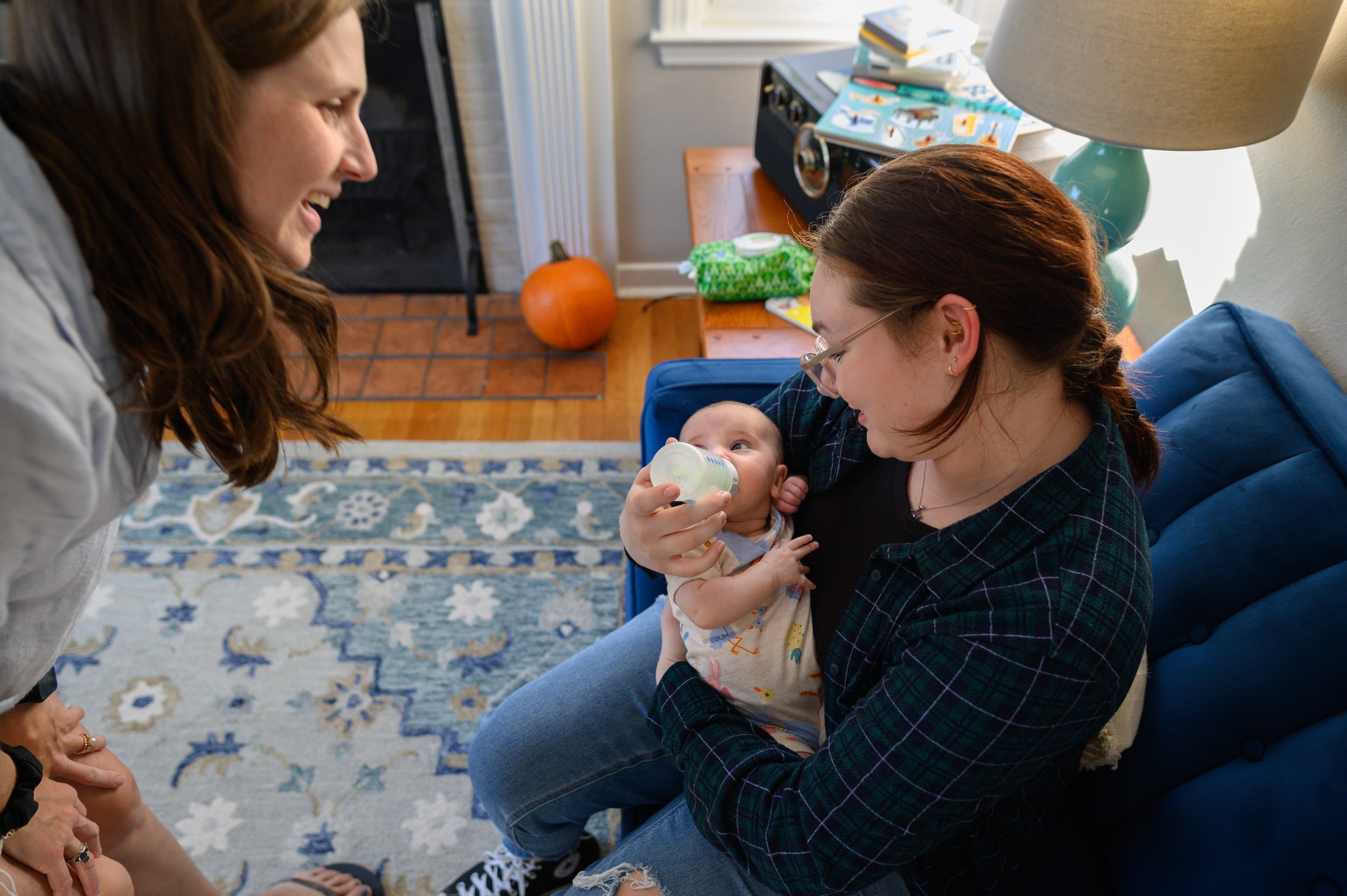
The Impact of MomsBloom
MomsBloom improves parent and child health by supporting physical and mental well-being and fostering healthy development. By closing gaps in care and addressing disparities, MomsBloom creates lasting impact for families and communities across Michigan.

Inputs
• Maintained database
• Trained postpartum volunteers and specialized aides
• Dedicated staff for training, coordination, and support
• Community partners
• Funding
• Community postpartum resource list

Services
• Hands-on and emotional support delivered in families’ homes
• Resource navigation, warm referrals, and digital outreach
• Comprehensive intake visits
• Staff and volunteer training

Results
• 600+ families supported annually
• 18,000+ volunteer hours delivered
• Hundreds of hand-offs to mental health, parenting, and social service resources
• Resource access in multiple languages

Short-Term Outcomes
• Reduced caregiver stress and isolation
• Increased awareness and access to postpartum resources
• Increased caregivers being screened for PMADs
• Increased parent education on urgent perinatal warning signs
• Improved rest and recovery for individuals
• Increased capacity for parent/child bonding

Intermediate Outcomes
• Increased early identification and treatment of postpartum mental and physical health needs
• Prevent and reduce symptoms of postpartum depression and anxiety
• Increased engagement in home visiting and mental health care
• Decrease in instances of child abuse and neglect

Long-Term Outcomes
• Decreased preventable parental mortality and morbidity
• Improved child development
• Reduced infant mortality
• Reduced economic cost of untreated mental health conditions
• Increased equity in access to postpartum care and support

Key MomsBloom Outcomes
& Supporting Data
Why These
Outcomes Matter
Supporting parents after birth saves lives, strengthens families, and creates healthier futures for children. Explore the resources on the right to learn more.
-
• Less than 20% of parents are screened for depression during their postpartum period (12 months after birth)
• It is recommended but not yet required for OBGYNs and pediatricians to offer the screening to parents
• 14,632 postpartum parents are diagnosed with postpartum depression and/or anxiety each year in Michigan
• 75% remain untreated in Michigan (10,974 parents)
-
• Most birthing parents don’t know the urgent health warning signs
• With only one postpartum visit at 6 weeks that lasts an average of 4 minutes, there is little time and resources to learn about urgent health warning signs. Additionally, only 60% of people attend their 6-week postpartum visit
• There is no requirement for OBGYNs or pediatricians to share this information
-
• MomsBloom is proven to reduce instances of child abuse and neglect through our MDHHS funding [1]
-
• 63% of perinatal (pregnancy, delivery, postpartum) deaths occur after delivery [2]
22% of those are due to mental health conditions (suicide & medication overdose)
16% is due to cardiovascular conditions
• 79.5% of postpartum deaths are deemed preventable [3]
Can be prevented with mental health screening / identification / referrals / engagement
Can be prevented with information and knowledge of urgent perinatal warning signs
-
• Untreated parent mental illness can lead to lasting emotional, social, and cognitive challenges for children
• Addressing parent’s mental health is crucial in promoting healthy child development
-
• Recorded 6.4 infant deaths per 1,000 live births in Michigan - March of Dimes 2025 [4]
• Infant deaths due to child abuse and neglect accounts for 50% of all child deaths in Michigan
-
• $32,000 per parent-child dyad
• $351 million annually in Michigan
-
• Long-standing disparities in parental and infant health outcomes for marginalized communities:
Barriers to care and support disproportionately affect Black, Indigenous, and People of Color (BIPOC), LGTBQ+ families, immigrants, and low-income families
Increased risk of death
Less likely to be screened and receive treatment for physical and mental health conditions
Timely support can prevent and reduce symptoms
Addressing disparities in gaps for children lead to improved developmental and health outcomes
Strategic Alignment
MomsBloom acknowledges the numerous state and federal plans and priorities. Our mission and model aim to align to each plan through our services and our strategic partnerships. It's all about meeting the needs of the families we serve.

Advancing Healthy
Births Plan
-
• Strategic vision – Zero preventable deaths and zero health disparities
• Priority area – Mental, behavioral health, and wellbeing
-
• Universal mental health screenings
• Social support and connections within community
• Develop postpartum support programs for non-birth parents and birth parents who do not identify as women
• Strengthen wraparound mental health services such as home visiting, peer support, resource navigation, and family support programs
• Provide anti-stigma and implicit bias training to all service providers
• Increase access to trauma-informed care training to all service providers
• Improve community awareness of postpartum resources

MMMS & FIMR Recommendations
-
Recommendations
• Increase access to family support services for all postpartum people in Michigan
• Increase the utilization of postpartum support

Policy Center of Maternal Mental Health
-
Recommendations
• Increase prenatal and postpartum depression screenings
• Approve insurance covered group parenting programs (new in 2025)

Postpartum Support International

Maternal Mental Health Leadership Alliances
1. Protective Factors Survey data from 2022
2. CDC Maternal Mortality Data
3. MDHHS 2024
4. March of Dimes 2025
Peer support is a significant solution for improved parental mental health outcomes. Learn more here
Community-level prevention and equity initiatives are aligned with the following state and federal initiatives:
• WMPQC - West Michigan Perinatal Quality Collaborative
• Kent Perinatal Mood and Anxiety Disorder Coalition